Growth Strategy
How I Grew From One Workshop to Six Businesses: A Garage Owner's Growth Story
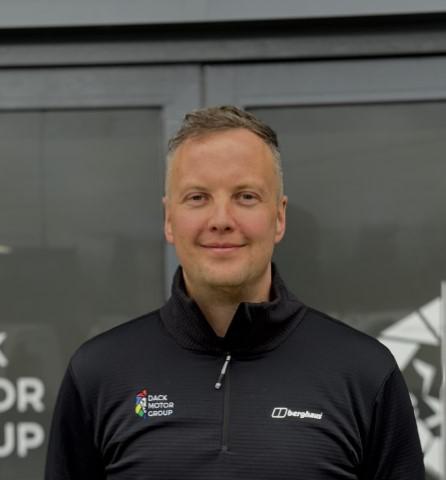
Twenty years ago I was a Vauxhall apprentice. Today I run six businesses across the Dack Motor Group. Here's what I learned about growth, acquisitions, and the mistakes I made along the way.
Nobody plans to build a group
When I started, I didn’t have a five-year plan to build a multi-site automotive group. I had one workshop, a handful of customers, and a determination to make it work.
The growth came in stages — and each stage taught me something I couldn’t have learned any other way. Some of those lessons were expensive. Some were painful. All of them were worth it.
Stage one: learning the trade
I started as an apprentice at Vauxhall. For years, I was on the tools — learning how engines work, how to diagnose problems, how to talk to customers who didn’t understand what was wrong with their car.
That time on the tools wasn’t just technical training. It was the foundation for everything that came after. When I’m helping a garage owner understand their gross profit per hour, I know what it’s like on the floor. I know what a productive technician looks like, what a frustrated one looks like, and what the difference means for the bottom line.
You can’t coach a garage owner if you’ve never been inside one. That’s not a qualification — it’s just a fact. The trust I build with the people I work with comes from having been where they are.
Stage two: the first workshop
Buying my first workshop was the scariest thing I’ve ever done. Suddenly, the buck stopped with me. If the rent wasn’t paid, that was on me. If a customer was unhappy, that was on me. If a technician walked out, that was on me.
The first year was chaos. I was doing everything — quoting, fixing, ordering parts, sweeping the floor, chasing payments. I was working 70-hour weeks and making less than I’d earned as an employee.
But slowly, things started to click. I found my rhythm with pricing. I built a customer base. I hired my first technician and learned how to manage someone else’s work for the first time.
The key realisation: the work isn’t the business. The business is the system around the work. Once I started building systems — for quoting, for scheduling, for customer follow-up — the workshop started running without me being involved in every detail.
Stage three: the second site
The jump to a second location was where I made my biggest mistake. I thought what worked at the first site would automatically work at the second. It didn’t.
What I’d built at the first workshop was a set of systems that I carried in my head. When I tried to replicate them at a new site with a different team, I discovered that what I thought was a system was actually just me — my habits, my instincts, my relationships with customers.
The second site struggled for the first eighteen months. Not because the location was wrong, but because I hadn’t documented anything. A new team couldn’t read my mind. They needed process documents, pricing structures, and a service advisor who could quote the way I did.
That’s when I learned to write things down. Every process, every pricing decision, every customer communication standard — all documented, all accessible to anyone in the business. It took three months to write it all up, and it was the best investment I’ve ever made.
Stage four: acquisitions and expansion
Once the systems were documented, growth became faster and less risky. We acquired a bodyshop. We added a van hire division. We started a conversions business. Each one followed the same pattern:
- Understand the numbers before you start — what’s the break-even, what’s the margin, how long until profitability?
- Put the right person in charge — not the best technician, the best manager. Someone who can run the day-to-day without you.
- Apply the systems — quoting, scheduling, customer communication, financial reporting. All the same frameworks, adapted for the specific business.
- Review monthly — for the first year, review the numbers every month. Not quarterly. Monthly.
The growth I didn’t expect
The thing that surprised me most about growth was how it changed my role. By the time we had four businesses, I wasn’t fixing cars, quoting jobs, or ordering parts. I was:
- Reviewing financial performance across all sites
- Coaching the managers running each business
- Exploring new revenue streams and opportunities
- Managing the group-level relationships — suppliers, bank, property
And I loved it. I’d spent years thinking I’d always be a “garage man.” But the further I moved from the tools, the more value I could add — not just to one workshop, but to the whole group.
What I’d do differently
If I could go back and change one thing, it would be this: I’d start building systems from day one. Not when I expanded. Not when I hired my fifth employee. From the very first day.
Every process you carry in your head is a process that can’t be delegated. Every decision you make on instinct is a decision that can’t be reviewed or improved. Every task you do yourself because “it’s faster” is a task that will eventually become a bottleneck.
The garages I coach now that grow fastest aren’t the ones with the best location or the most talented technicians. They’re the ones where the owner has invested time in building systems — and has the discipline to let those systems run.
Where you go from here
If you’re at the start of your journey — one workshop, doing everything yourself — that’s exactly where I was. The path from one to six isn’t mysterious. It’s a series of decisions about what to systematise, what to delegate, and what to stop doing yourself.
If you’re stuck at the stage where the business can’t run without you, that’s the most common place to get stuck. And it’s the one I can help with most directly — because I’ve been there, and I know how uncomfortable it is to let go.
Book a free discovery call. No obligation, no pressure. Just a conversation about where you are and where you want to go.
Ready to improve your garage business?
Book a free discovery call and let's discuss how I can help.
Book a call